 how-to
Fix High Cart Abandonment Rates: A 2026 Guide
Table of Contents
- What Cart Abandonment Rates Actually Mean for Your Revenue
- Average Cart Abandonment Rate by Industry
- Why Shoppers Leave: Checkout Friction and Psychological Triggers
- Checkout Optimization Best Practices to Fix High Cart Abandonment Rates
- Abandoned Cart Email Templates That Actually Recover Sales
- Cart Abandonment Recovery Tools Worth Using
- B2B vs. B2C Strategies and AI-Driven Personalization
- Conclusion
Last Updated: August 20, 2026
What Cart Abandonment Rates Actually Mean for Your Revenue
Cart abandonment rate is the percentage of online shoppers who add items to their cart but leave before completing a purchase. It's calculated by dividing incomplete purchases by total carts initiated, then subtracting from 100.
Every abandoned cart represents a warm lead, a shopper interested enough to engage with your product but stopped by friction, anxiety, or surprise. At Authentic Digital Solutions, we work with Shopify merchants daily who watch this happen in real time without understanding where the leak is.
According to Baymard Institute's checkout usability research, the average cart abandonment rate across industries sits around 70%, meaning roughly 7 out of 10 shoppers who add something never buy. This guide shows you exactly how to audit your checkout funnel, fix friction points, and recover lost sales through email automation and smarter UX.
The core insight: most cart abandonment isn't about price or intent. It's about friction, anxiety, and surprise. Fix those three things, and your conversion rate improves without spending more on ads.
Average Cart Abandonment Rate by Industry
Not all abandonment is equal. Sectors like travel, finance, and fashion see the highest rates because purchase decisions are complex, prices are higher, and shoppers comparison-shop heavily. Retail and consumer goods perform better but still face significant drop-off at checkout.
| Industry | Typical Abandonment Rate | Primary Driver |
|---|---|---|
| Travel & Hospitality | Very high (80%+) | Price comparison, long booking flows |
| Fashion & Apparel | High (70-75%) | Sizing uncertainty, returns concern |
| Consumer Electronics | High (70-75%) | Research phase, price sensitivity |
| General Retail | Moderate (65-70%) | Unexpected fees, account friction |
| Health & Beauty | Moderate (60-68%) | Trust signals, ingredient concerns |
| Grocery & Food | Lower (50-60%) | Habitual purchase, simpler checkout |
The KPI that matters most isn't your raw abandonment rate, it's the trend. A rate improving month over month means your optimization efforts are working. Use session recording tools and heatmaps to understand where users drop off, that data is far more actionable than a single benchmark number.
Why Shoppers Leave: Checkout Friction and Psychological Triggers
Most checkout abandonment comes down to one of three states: surprise, doubt, or effort. Shoppers experiencing any of these in your checkout flow are statistically more likely to leave.
The moment a shopper encounters something unexpected, a hidden fee, a form asking for more than expected, or a page that looks insecure, their purchase intent drops sharply. Understanding these psychological triggers helps you fix the right things.
Unexpected Fees and Shipping Costs
This is the single biggest driver of cart abandonment. Shoppers build a mental price as they browse. When checkout reveals shipping costs, taxes, or handling fees not visible earlier, that mental contract breaks.
The fix isn't always free shipping, it's transparency. Displaying estimated shipping costs on product pages or in the cart before checkout removes the surprise. Many stores see meaningful improvement simply by surfacing this information earlier.
If free shipping isn't viable for your margins, consider:
- Set a free shipping threshold and display it prominently ("Add $12 more for free shipping")
- Offer flat-rate shipping so costs are predictable
- Build shipping into product pricing and market it as "free", shoppers respond better to this psychologically
Forced Account Creation vs. Guest Checkout
Requiring account creation before purchase is a well-documented source of checkout friction. Many shoppers, especially first-time visitors, want to buy quickly without a long-term commitment.
According to Baymard Institute's large-scale checkout study, account creation friction is consistently among the top abandonment reasons. The fix: offer guest checkout as the default, with account creation as an optional post-purchase step.
Shopify handles this natively. Configure your store to present guest checkout prominently, then prompt shoppers to save details after order confirmation, when they're in a positive emotional state.
Trust Signals, Security Badges, and Purchase Anxiety
Purchase anxiety is real, especially for first-time buyers. Trust signals address concerns before shoppers ask them. The most effective include:
- SSL certificate indicators (padlock in browser bar)
- Recognizable payment gateway logos (Visa, Mastercard, PayPal, Apple Pay)
- Clear return and refund policy links on the checkout page
- Customer reviews or star ratings near the purchase button
- Security badges from recognized providers
Placement matters as much as presence. Trust signals buried in the footer don't help a hesitating shopper. Put them in the checkout flow itself, near the "place order" button.
Checkout Optimization Best Practices to Fix High Cart Abandonment Rates
Effective checkout optimization is a systematic audit of every step in your checkout flow, identifying where drop-off happens, and removing obstacles. Cart abandonment rates respond well to incremental improvements stacked together. secure encrypted checkout.
Mobile Responsiveness and One-Page Checkout
More than half of e-commerce traffic comes from mobile devices. A checkout flow that works on desktop but requires excessive scrolling or tiny tap targets on mobile is a conversion killer.
One-page checkout reduces cognitive load. Instead of navigating multiple steps, shoppers see everything at once: shipping, payment, and order summary on a single screen. Run your checkout through real device testing, not just browser emulation. Check tap target sizes, auto-fill compatibility, digital wallet appearance, and page load speed on 4G connections.
A/B testing different checkout layouts is the most reliable way to know what works for your audience. Don't assume, measure.
Form Field Optimization and Digital Wallet Support
Every unnecessary form field is a reason to abandon. Audit your checkout form and ask: do we actually need this information to fulfill the order?
Best practices:
- Remove optional fields or move them post-purchase
- Use address auto-complete to reduce manual entry
- Enable digital wallet payments (Apple Pay, Google Pay, Shop Pay), these eliminate form entry almost entirely for returning users
- Use inline validation so shoppers see errors as they type
Digital wallet support deserves special attention. Shoppers using Apple Pay or Google Pay complete checkout significantly faster than those entering card details manually.
Abandoned Cart Email Templates That Actually Recover Sales
Email automation is the most reliable recovery channel for cart abandonment. A well-timed, well-written sequence can recover a meaningful percentage of abandoned carts, and the economics work because you're reaching people who already showed purchase intent.
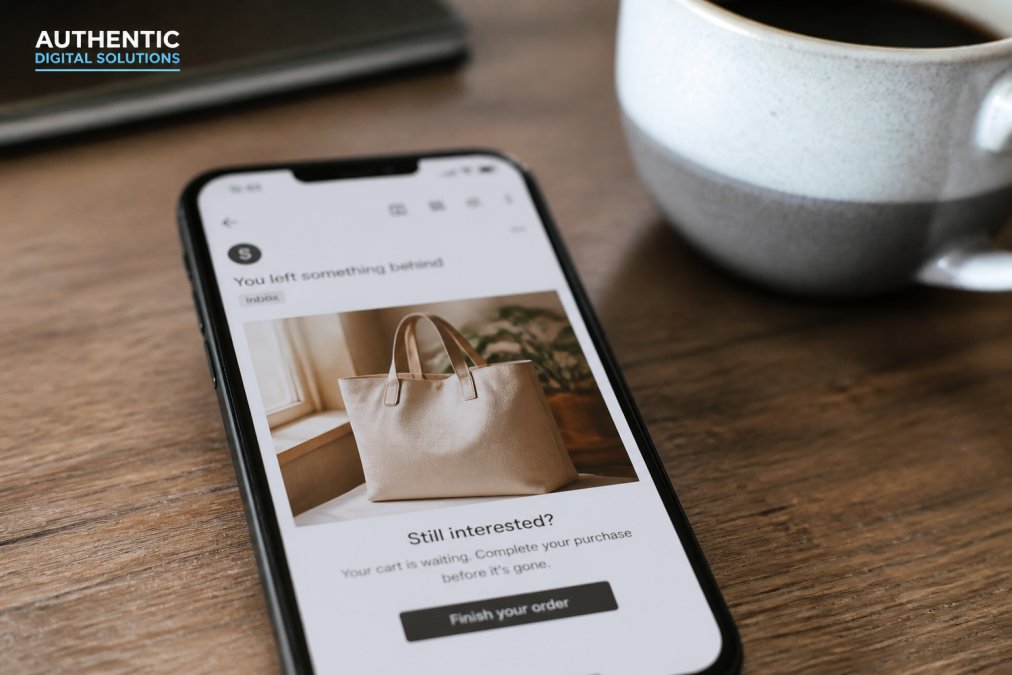
Email 1, Sent 1 hour after abandonment (Reminder)
Subject: You left something behind
Hey [First Name],
Looks like you got interrupted. Your [Product Name] is still waiting in your cart.
[Product Image + Name + Price]
[Return to Cart Button]
Any questions before you buy? Reply to this email, we're real people and we read every message.
[Brand Name]
Email 2, Sent 24 hours after abandonment (Value reinforcement)
Subject: Still thinking it over?
[First Name], here's why [Product Name] is worth it:
[2-3 bullet points: key benefits, customer review snippet, guarantee reminder]
[Return to Cart Button]
P.S. We can only hold your cart for [X] more hours.
Email 3, Sent 72 hours after abandonment (Incentive)
Subject: Last chance, here's something for you
[First Name], we don't want you to miss out.
Use code [SAVE10] at checkout for 10% off your order.
[Return to Cart Button]
This offer expires in 24 hours.
Keep templates concise. One clear button, one clear message per email.
Cart Abandonment Recovery Tools Worth Using
The right recovery tools depend on your platform and existing stack. For Shopify merchants, the native ecosystem covers most needs without complex integrations.
According to Shopify's e-commerce platform documentation, abandoned cart email automation is built into Shopify's core platform and can be configured without third-party apps for basic sequences.
For sophisticated segmentation and multi-channel recovery (email + SMS), a dedicated email platform with Shopify integration gives you more control over timing, personalization, and A/B testing. Key capabilities to look for:
- Behavioral triggers: Fires automatically when a cart is abandoned
- Segmentation: Treats first-time visitors differently from returning customers
- SMS integration: Adds a text message touchpoint
- Exit-intent popups: Captures email addresses before shoppers leave
- Session recording and heatmaps: Shows exactly where shoppers drop off
Exit-intent technology is particularly underused. A well-timed popup offering a small incentive or asking "Before you go, can we answer any questions?" captures contact information from shoppers who would otherwise leave anonymously.
Retargeting ads through paid social complement email recovery well. A shopper who abandons and then sees your product in their Instagram feed is more likely to return.
B2B vs. B2C Strategies and AI-Driven Personalization
Standard cart abandonment playbooks are built for B2C. B2B abandonment has different root causes and requires different fixes.
B2B buyers typically abandon because they need approval from someone else, need a purchase order instead of a credit card, or need a quote rather than fixed pricing. The recovery strategy here is friction reduction in checkout itself: offer net payment terms, purchase order support, and a direct sales rep line for large orders.
For B2C, the emerging opportunity is AI-driven personalization. Instead of sending the same three emails to every shopper, AI tools analyze individual behavior to determine optimal send times, which product to feature, and whether a discount will convert this specific shopper.
Authentic Digital Solutions builds Klaviyo flows that incorporate behavioral segmentation, predictive send timing, and multi-channel coordination between email, SMS, and paid retargeting. The difference between generic sequences and personalized ones shows up in recovered revenue.
Post-purchase abandonment prevention is another angle most guides miss. A shopper who completes one purchase is your best candidate for a second. Confirmation email quality, shipping updates, and unboxing experience directly affect whether they return. Treating post-purchase as part of abandonment prevention closes the loop on the full customer journey.
Frequently Asked Questions
What is a good cart abandonment rate for ecommerce?
Most ecommerce stores see cart abandonment rates between 70% and 80%, so anything below 70% is generally considered strong performance. Rates vary significantly by industry, luxury goods and B2B stores tend to see higher abandonment than everyday consumer goods. Rather than chasing a single benchmark, track your own rate over time and measure improvement against your baseline after making checkout changes.
How can email marketing help recover abandoned carts?
A well-structured abandoned cart email sequence, sent through a platform like Klaviyo, can recover a meaningful share of lost orders. The first email should go out within one hour of abandonment and simply remind the shopper what they left behind. A second email at 24 hours can address common objections like shipping costs. A third at 48-72 hours can include a limited-time incentive. Personalizing subject lines and product images consistently lifts open and click rates.
Does offering free shipping actually reduce cart abandonment rates?
Unexpected shipping costs are consistently cited as the top reason shoppers abandon checkout. Displaying shipping costs early in the checkout flow, or offering free shipping above a clear order threshold, removes the most common friction point. You do not have to absorb the cost entirely, raising your average order value threshold for free shipping can offset the expense while still reducing abandonment driven by fee surprises.
What are the most effective ways to reduce checkout friction quickly?
The fastest wins typically come from enabling guest checkout, reducing the number of form fields, adding digital wallet options like Shop Pay or PayPal, and displaying security badges near the payment section. Exit-intent popups that offer a small discount or free shipping code also recover shoppers before they leave. For mobile users, ensuring your checkout is fully responsive and loads in under three seconds makes a significant difference in conversion rate.
High cart abandonment rates are a revenue problem hiding in your analytics, and most of the fixes don't require a complete rebuild of your store. Authentic Digital Solutions specializes in exactly this kind of conversion rate optimization, from Shopify checkout audits and Klaviyo email automation to paid retargeting and UX improvements that reduce checkout friction without a full redesign. If your store is losing customers at checkout, book a strategy session and let's find where the leak is.
This article was written using GrandRanker
Frequently Asked Questions
What is a good cart abandonment rate for ecommerce?
Most ecommerce stores see cart abandonment rates between 70% and 80%, so anything below 70% is generally considered strong performance. Rates vary significantly by industry — luxury goods and B2B stores tend to see higher abandonment than everyday consumer goods. Rather than chasing a single benchmark, track your own rate over time and measure improvement against your baseline after making checkout changes.
How can email marketing help recover abandoned carts?
A well-structured abandoned cart email sequence, sent through a platform like Klaviyo, can recover a meaningful share of lost orders. The first email should go out within one hour of abandonment and simply remind the shopper what they left behind. A second email at 24 hours can address common objections like shipping costs. A third at 48-72 hours can include a limited-time incentive. Personalizing subject lines and product images consistently lifts open and click rates.
Does offering free shipping actually reduce cart abandonment rates?
Unexpected shipping costs are consistently cited as the top reason shoppers abandon checkout. Displaying shipping costs early in the checkout flow, or offering free shipping above a clear order threshold, removes the most common friction point. You do not have to absorb the cost entirely — raising your average order value threshold for free shipping can offset the expense while still reducing abandonment driven by fee surprises.
What are the most effective ways to reduce checkout friction quickly?
The fastest wins typically come from enabling guest checkout, reducing the number of form fields, adding digital wallet options like Shop Pay or PayPal, and displaying security badges near the payment section. Exit-intent popups that offer a small discount or free shipping code also recover shoppers before they leave. For mobile users, ensuring your checkout is fully responsive and loads in under three seconds makes a significant difference in conversion rate.